
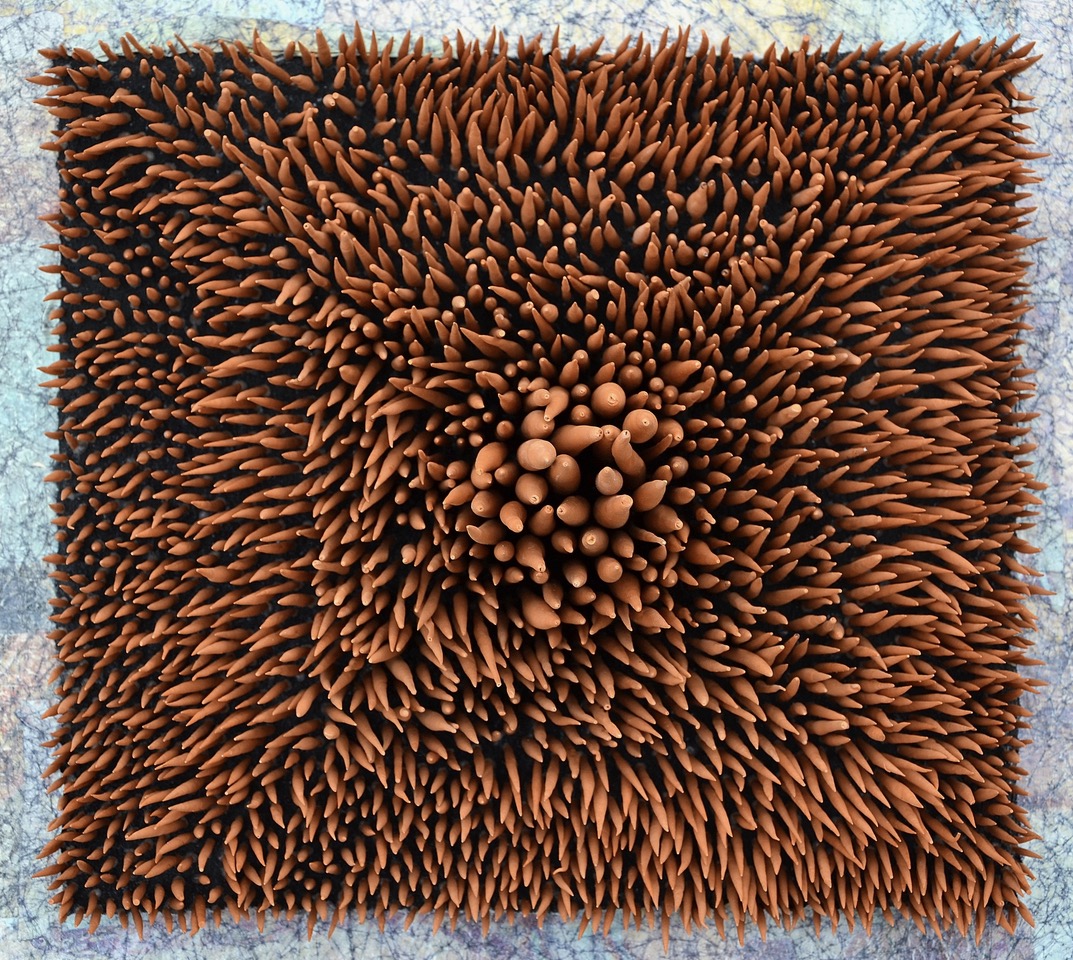
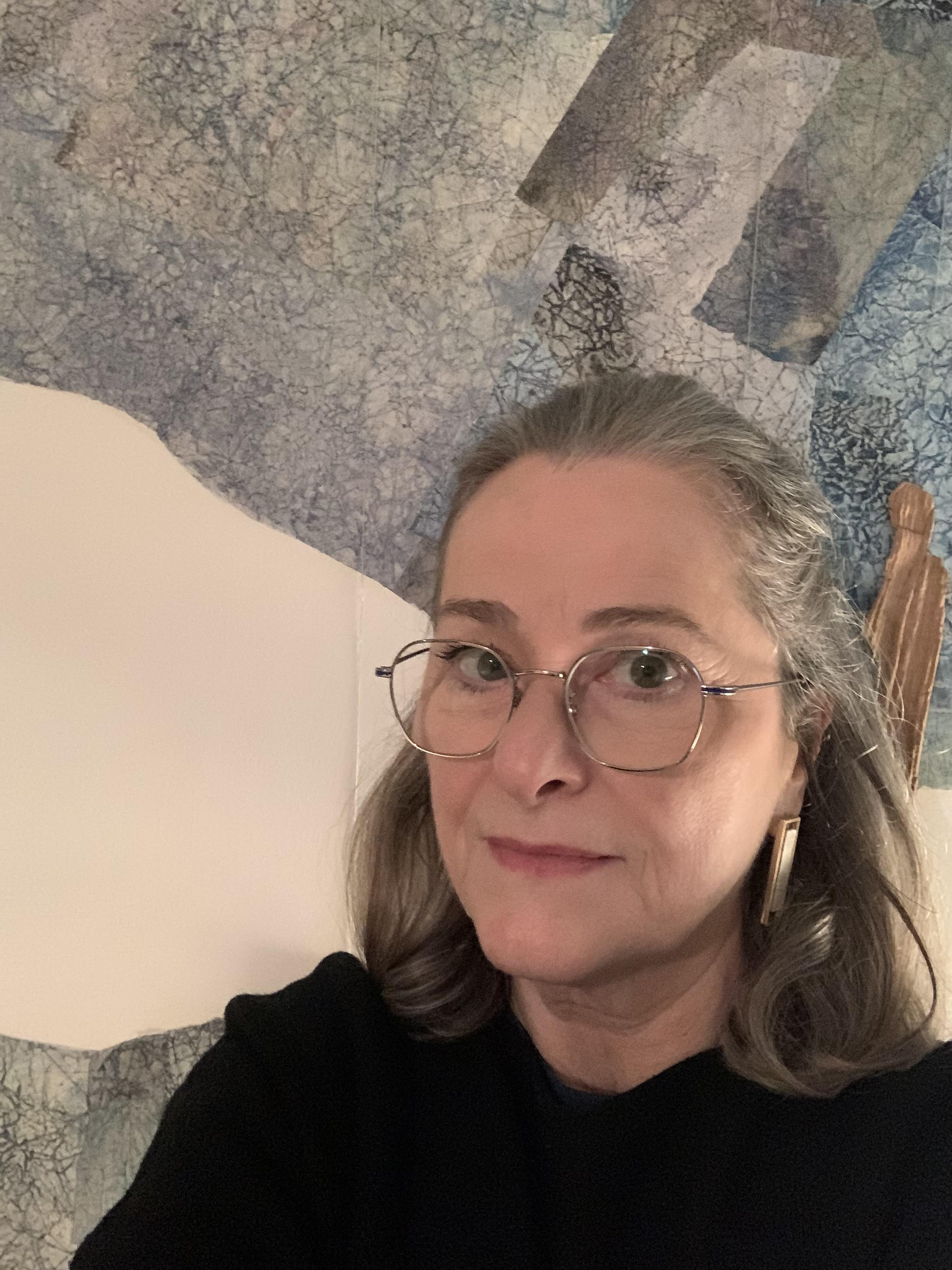
In her work, Carola Masini explores the traces that time leaves behind, in matter, in memory, and in the human experience. Moving between sculpture, terracotta, found objects, textiles, and other materials, she transforms fragments of everyday life into works that speak of memory, connection, wounds, and repair. In this conversation, she reflects on her artistic journey, her relationship with material, and the quiet dialogue she seeks to create between her work and those who encounter it.
1. Your artistic journey was born from a profound need for expression. Which experiences, encounters, or moments have contributed most to the development of your artistic language?
I was born in Nuoro and grew up in Rome. These are two places that continue to inhabit my work in different yet complementary ways. From Sardinia, I carry with me a sense of origin, a relationship with the earth, and a perception of time that seems to settle into things. Rome, on the other hand, became the place of my education, encounters, and discovery of art as a way of giving form to thought.
At the Academy of Fine Arts, I chose sculpture and graduated under Venanzo Crocetti. From him, I learned the rigor of craftsmanship, respect for material, and the awareness that every form emerges from a patient dialogue between thought and making. My studies in printmaking and screen printing further refined my relationship with gesture, traces, and everything that remains imprinted over time.
Looking back at my journey, I believe it is precisely this idea of the imprint that has accompanied my entire artistic research: observing what time leaves behind in people, objects, and places, and trying to give those traces a form capable of speaking to others as well.
2. Your practice moves between sculpture, painting, mixed media, and different material experiments. What role do color, material, and surface play in your artistic practice?
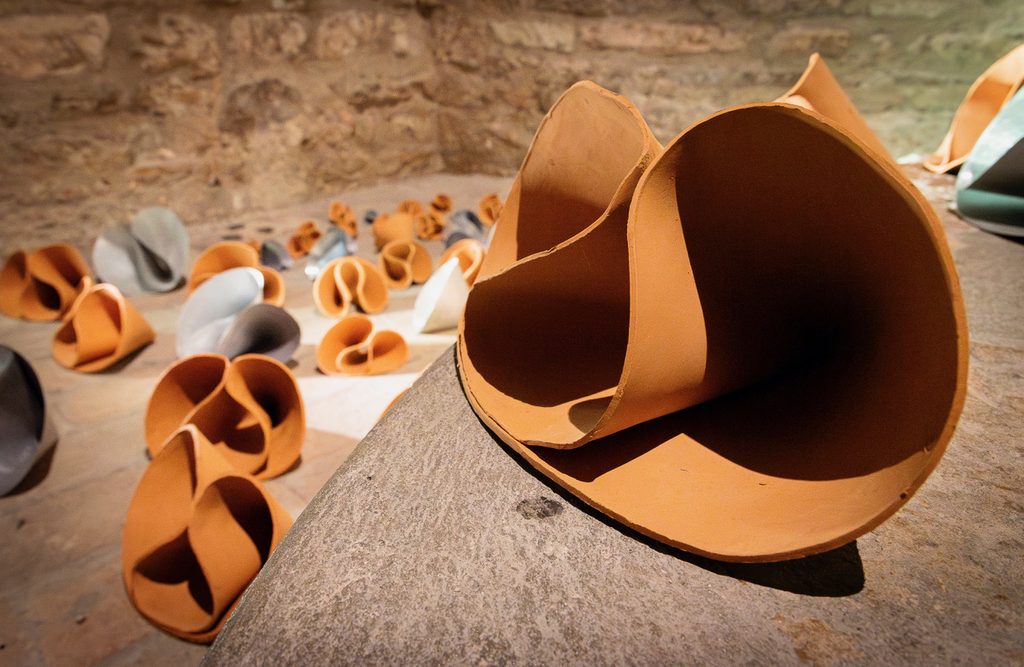
I consider myself primarily a sculptor because my way of thinking passes through material, the three-dimensionality of form, and its relationship with space. Terracotta is the material that represents me most closely. It is an original material, born from the encounter between earth, water, air, and fire. Within it, every gesture remains recorded: the pressure of the hands, a small incision, a fracture, a repair. Nothing truly disappears.
This ability to preserve traces fascinates me deeply. Every surface tells the story of the time spent making and, at the same time, the time of life itself. Alongside terracotta, I work with wood, metal, paper, textiles, and everyday objects. These materials arrive in my studio with a story that has already begun. That is precisely why I choose them. I do not want to erase what they once were, but rather allow those experiences to continue living within new relationships.
Color follows the same principle. It does not describe or illustrate. It is a discreet presence, capable of accompanying the material and suggesting an emotional resonance.
3. Your works often contain an emotional and narrative dimension. How do you transform sensations, memories, and personal perceptions into images and forms?
I do not think of memory as something to be preserved, but as something that continues to transform. Every experience leaves an imprint: some are evident, others almost invisible. I am interested in collecting precisely these traces. The surface becomes the place where stories meet: a fragment, a worn object, a crack, a stitch.
I am not looking for a perfect skin, but for a surface capable of revealing the process, the layers, the wounds, and the repairs. Once they enter the artwork, they cease to belong solely to my story and become material available for an encounter with the story of whoever observes it.
I am not trying to tell my own story. Rather, I try to create a space in which everyone can recognize something of their own experience.
4. How does a new work come into being? Does the creative process begin with a precise idea, or is it more of a spontaneous dialogue with materials, colors, and intuitions?
It almost always begins with an unexpected encounter. It might be a found material, an object that has been kept for years, or an image that continues to resurface without any particular reason. Sometimes it is a phrase, a poem, or a story. Many things coexist in my studio, waiting for their moment. Some remain untouched for months; others suddenly find a relationship with another element and begin to suggest a form.
The work finds its balance when idea, gesture, and material begin to listen to one another.
5. How important is the relationship between what is visible and what remains hidden within the artwork?
Perhaps it is a way of reminding us that every person carries a story that can never be entirely told.
It is fundamental. Even in life, what shapes us never completely coincides with what is visible. In my works, there are parts that remain unseen: fragments embedded in terracotta, internal stitches, layers covered by other surfaces. I like the fact that they continue to inhabit the work without being completely revealed. After all, memory works in much the same way: we remember in fragments, inevitably leaving areas of shadow.


6. Memory and time are recurring elements in artistic research. How do personal experiences and collective memory influence your work?
I think memory is always a form of relationship. Personal experiences are the starting point, but they acquire meaning when they are able to encounter the experiences of others. Every object I collect carries the memory of a use, an absence, a human presence. When I incorporate it into my work, I am not simply trying to preserve it, but to offer it a new possibility of storytelling. In this way, memory does not remain closed within an archive; it is put back into circulation.
Individual memory thus naturally opens itself to a collective dimension.
7. The materials in your works seem to possess their own identity and history. How do you choose the elements you work with, and what relationship do you create between material and emotion?
I believe every material deserves to be listened to. Terracotta preserves the gesture, wood speaks of time, metal carries the marks of transformation, and textiles retain a sense of closeness to the body.And then there is thread.
It is a simple, almost everyday element, but over time it has taken on an increasingly profound meaning in my work. To stitch means to unite without erasing separation. It means acknowledging it, accepting it, and making it part of a new story. A stitch does not eliminate a wound. It makes it visible and, at the same time, can transform it into a point of strength.
That is why I use red thread for stitching fabrics and paper, while for terracotta I use metal wire. Thread runs through my works as a sign of care and connection. I like to think that every knot tells a story of a relationship, and that every stitch makes visible the invisible web that connects people to their own stories.
8. An artwork can be seen as a space of encounter between artist and viewer. What kind of dialogue would you like to create with those who experience your work?
I would like my works to invite people to slow down. If the viewer manages to pause, even for a few moments, a dialogue can begin. Each person arrives with their own experience and completes the work through their own gaze. When this happens, the artwork ceases to belong only to me and becomes a shared space.
This is probably the aspect of making art that I value most. I do not want to offer a single, definitive interpretation. I am interested in allowing each person to move through the work while carrying their own story with them.
9. In a society characterized by speed, digital images, and constant change, what role can contemporary art play today?
I believe art can give time back to us. Time to look, to touch, to listen. We live surrounded by images that move rapidly and are often consumed without truly being observed. Artistic practice, on the other hand, requires slowness, attention, and listening. It offers a space in which to pause, reflect, and process information critically. Moreover, when we speak of material, it possesses a different sense of time from the digital world. Modeling, stitching, and assembling are gestures that require presence and time, and above all, they leave traces.
I believe that through the slowness of making and the layering of marks, materials, and forms, it is possible to create a dialogue between people and, at the same time, rebuild a relationship between past and present.
Perhaps this is where I see one of the most important values of contemporary art today: in its ability to create a space of attention and connection, where we can once again look at what surrounds us with greater awareness, without necessarily having to consume everything immediately.
10. Looking back at your artistic journey, is there a particular moment, experience, or transformation that you consider especially important in your development as an artist?
I cannot identify just one. Rather, I see a journey made up of continuous crossings, experiences, and transitions that have gradually contributed to shaping my artistic research.
For many years, I have taught Plastic and Sculptural Arts. Entering the studio every day with my students is also a way of sharing knowledge, experience, and a passion for making, continuing a relationship with material and work that has accompanied me throughout my life. I believe it is precisely this continuity — made up of practice, experience, and research that characterizes my journey.
11. Looking to the future, what advice or thought would you like to share with young artists who are searching for their own voice and path?
Research requires time, patience, and the ability to move through uncertainty. It is important to cultivate curiosity, to observe the world attentively, and to learn to listen to what truly belongs to you. Technique is essential, but so is the willingness to continually question yourself. Every authentic artistic language emerges from the encounter between rigor, experience, and freedom.
12. A more personal question: wine or beer?
It depends on the situation. With a beautiful plate of pasta, definitely wine. But I also really enjoy an evening at a brewery with friends. In that case, obviously…beer.
Want to see more?
Read the article in its original language: Italian.
 No products in the cart.