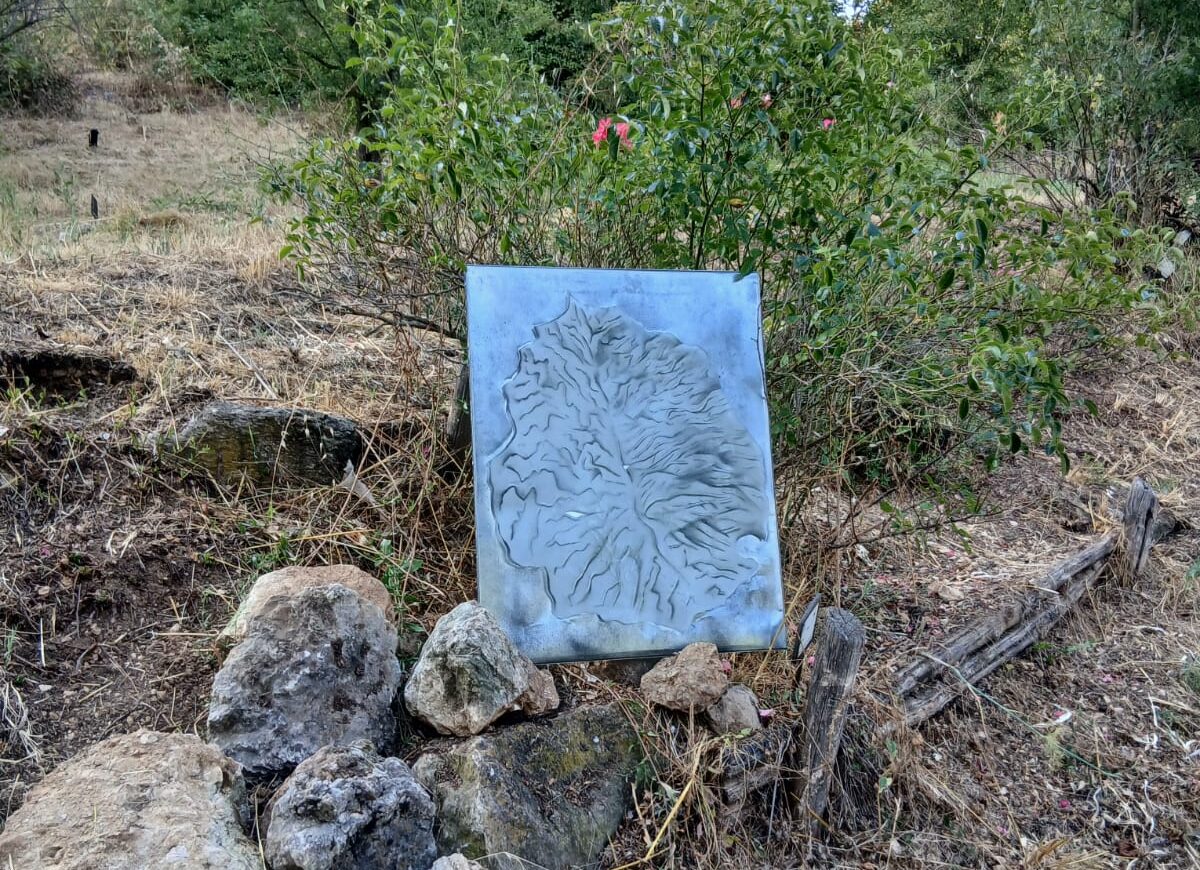
On the occasion of Germogliati semi. Omaggio a Joseph Beuys, we meet an artist whose practice unfolds at the intersection of memory, material and perception. Working with layers, light, transparency and space, he invites the viewer to slow down and look beyond the immediately visible. In this conversation, he reflects on artistic maturation, the poetry of materials, and the quiet transformation that takes place when an artwork is truly given time to emerge.
On Memory, Material, Light and the Art of Looking Slowly
On the occasion of the exhibition “Germogliati semi. Omaggio a Joseph Beuys”
1. For many years, you chose to develop your artistic research away from the public eye, allowing it to mature before presenting it to an audience. How important was this period of silence and gestation in finding a voice that was truly your own?
It was essential. I felt the need to remove my research from the urgency of exhibition and recognition, allowing it to settle alongside the experiences of life. For many years, I pursued my artistic work alongside a long managerial career—two seemingly distant worlds that, in reality, taught me the same things: discipline, observation and the value of process.
Being self-taught gave me an extraordinary sense of freedom, but it also demanded discipline and study. I moved through the second half of the twentieth century, through Minimalism and the evolving relationship between gesture, mark and colour, without ever feeling compelled to belong to a particular school.
When, in 2017, I decided to open my work to public spaces, I did not feel that I was beginning something new. Rather, I felt I was finally making visible something that had needed many years to find an authentic form.

2. In writing about your work, words such as memory, layering and transformation appear repeatedly. What does it mean to you to treat memory not as an archive of the past, but as a living material with which to construct the present?
Memory, for me, is neither a closed room nor an orderly collection of images. It is a substance that continues to change each time we question it. To remember is also to choose, to superimpose, to erase and to transform. In that sense, remembering is already an act of creation.
In my Exercises in Memory, the artistic experiences of the past are not quotations to be repeated, but presences to be encountered critically. I search for an ex novo—something new that contains what I have learned and experienced without becoming imprisoned by it.
The physical layers within the works operate in much the same way. Each veil preserves a trace, yet in relation to the layers around it, it produces something new. Memory therefore becomes a way of constructing the present while, at the same time, imagining what does not yet exist.

3. Your works seem to shift continually according to light, the viewer’s position and the space that contains them. Is it important to you that a work never settle into a single, definitive image?
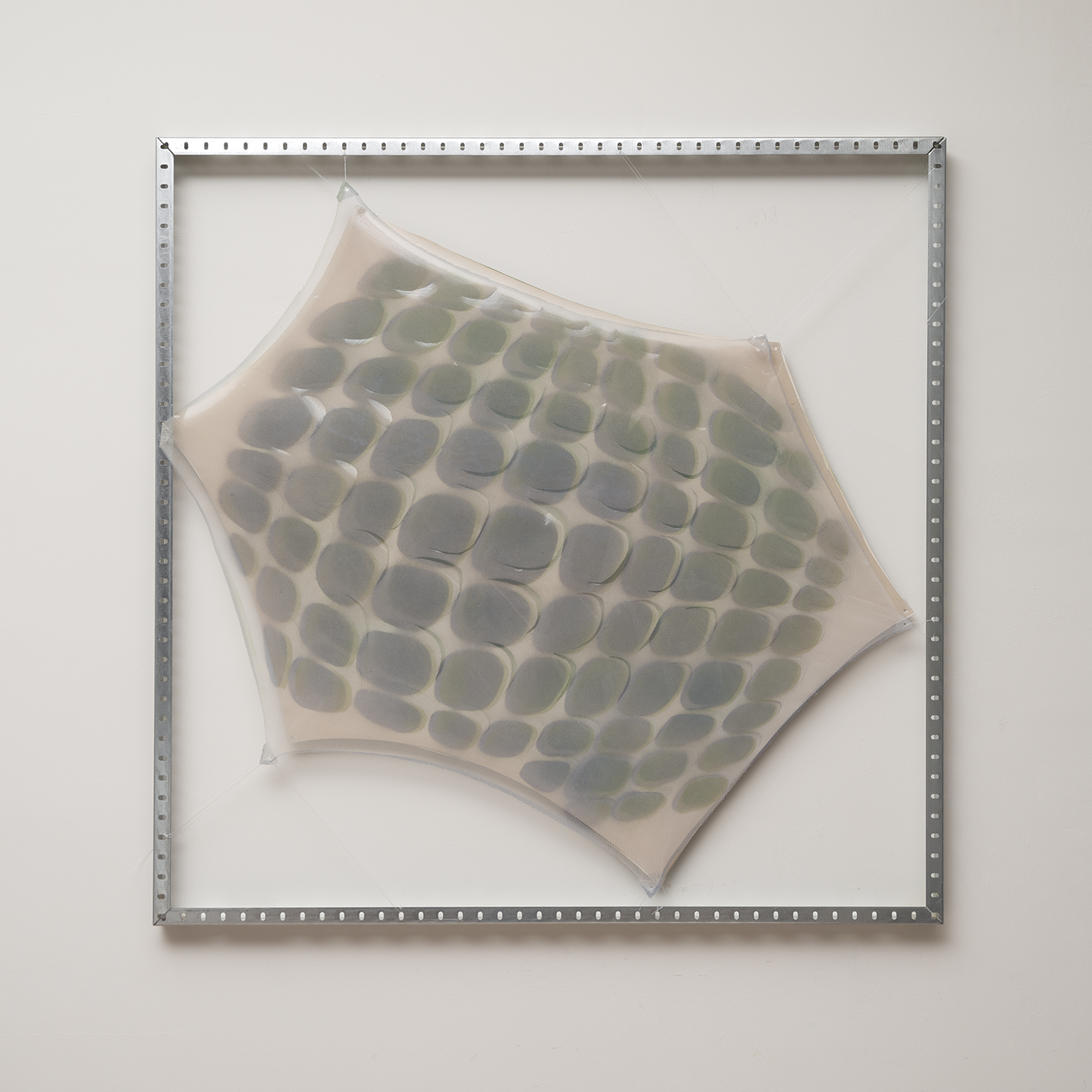
Yes. It is central to my research. I do not think of the work as a static image, completed once and for all. Filtering surfaces, nets, transparencies and reflective materials respond to light, shadow, space and the movement of the viewer. Even the smallest shift can reveal a colour, a depth or a form that was previously invisible.
This instability is not a limitation. It is the living condition of the work. I am interested in the viewer not encountering a definitive answer, but entering a perceptual experience. The work changes because the gaze changes. And, in a sense, it reminds us that reality itself is never offered from a single point of view.
4. You work with very different materials textiles, nets, iron, nylon and transparent surfaces—which retain their individual identities while entering into dialogue with one another. How do you choose these materials, and what fascinates you about their physical and symbolic qualities?
I choose materials through a very direct, almost tactile relationship. I am interested in what each material carries with it before I intervene: fabric and net possess memory, flexibility and the ability to filter; galvanised iron introduces structure, resistance and a harder quality of light; nylon brings lightness, tension and transparency.
In my earlier works, I also used recycled fabrics precisely because I did not want to erase the histories they already carried. I do not try to disguise the nature of the materials. On the contrary, I allow them to encounter one another while preserving their differences and contrasts. It is within this relationship that matter acquires another possibility: something heavy can appear light; something rigid can suggest movement; a thin surface can generate volume.
The choice always begins with a formal necessity, but also with the material’s symbolic capacity to speak of protection, fragility, resistance and transformation.
5. In many of your works, emptiness seems to hold the same importance as matter itself. How significant, in your practice, is what is not immediately visible?
It matters enormously. Emptiness is not an absence waiting to be filled. It is an active part of the composition. It allows light to pass through the work, shadows to draw across it, and the viewer’s gaze to move between its layers. Without emptiness, matter would lose its breath and its capacity for relationship.
I am drawn to what reveals itself slowly, to what remains on the threshold between the visible and the invisible. At times, it is precisely through subtraction that presence becomes more intense. Emptiness then becomes anticipation, interval, a mental space. It does not declare everything. Instead, it gives the viewer the necessary space to complete the work through their own perception and memory.
6. Your installations do not simply represent a space; they seem to construct a space to be traversed by the eye. When you begin a new work, do you think first about form, light or the experience you want to create for the audience?
There is not always a predetermined order. Sometimes everything begins with a material, with its resistance or transparency. At other times, it begins with a form I intuit, or with a particular condition of light. These elements, however, only acquire meaning when they enter into a relationship with space and with those who move through it.
I think of the work as a perceptual device rather than an isolated object. For this reason, the installation and the character of a place can transform the work itself.
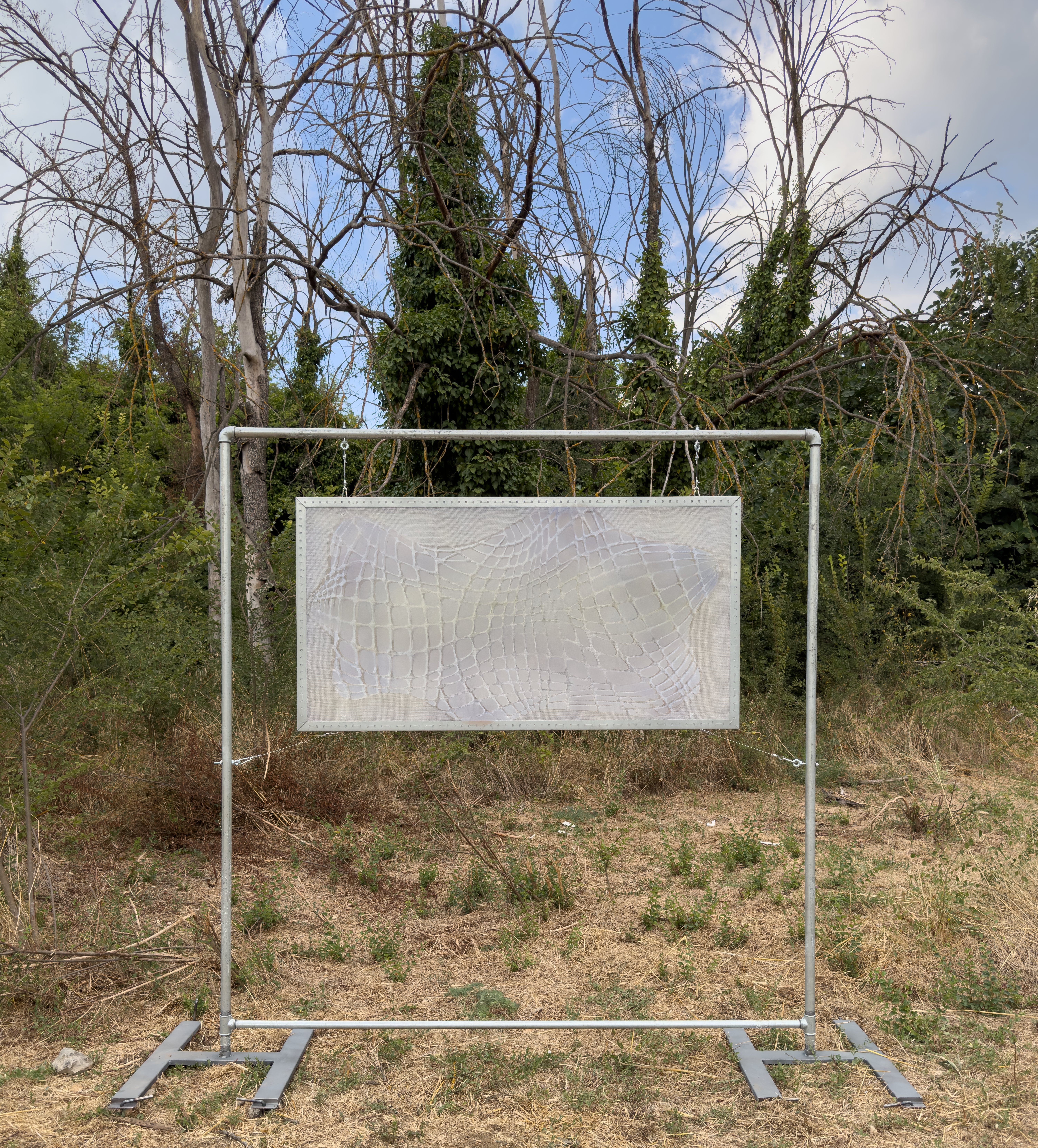
At the Orto Botanico in L’Aquila, for example, the installation I presented during the previous edition of Seminiamo Arte became almost a window. It intercepted the light and colours of the landscape, integrating itself with nature while, at the same time, maintaining an autonomous presence.
7. Joseph Beuys considered every material to carry energy, memory and the potential for transformation. How deeply does this idea resonate with your own understanding of matter and the creative process?
It resonates deeply, particularly in the idea that matter is never neutral. Every material possesses a history, a behaviour and a specific energy. The artist’s gesture is not to erase these qualities in order to impose a form, but to listen to them, place them in tension and create the conditions in which unexpected possibilities can emerge.
This is where I feel a particular affinity with Beuys: the artwork is a process of transformation, not merely an aesthetic result. In my work, a used textile, an industrial net, iron or nylon retain their own identities, yet their encounter with colour, light and space carries them somewhere else.
8. We are accustomed today to fast, immediate images. Your works, by contrast, seem to ask for time, attention and contemplation. Do you think that slowing down the gaze has become an almost revolutionary gesture?
I believe it has. We live within a continuous visual flow, in which images must seize our attention immediately before being replaced by the next. This speed risks reducing experience to its surface and diminishing our ability to interpret.
My works ask for a different kind of time. Not because they are deliberately obscure, but because they change and reveal themselves gradually. One has to move, observe how they respond to light, and accept that certain things may remain unresolved.
To slow the gaze is to restore depth to perception and freedom to thought. Today, that can indeed be a revolutionary gesture, precisely because it allows us, if only for a moment, to step outside the logic of “everything, immediately.”
9. There is a persistent tension in your work between protection and revelation, between what is concealed and what slowly emerges. Does this reflection also arise from your personal experience?
Yes, inevitably. My path has been marked by a strong sense of reserve and by a long period during which my artistic work remained an intimate dimension of my life. The works carry traces of that experience.
The veils protect while simultaneously allowing something to be glimpsed. The surfaces stretch like epidermis: they shelter something, yet remain constantly on the verge of opening. Ri-Velato and Seconda Pelle express this tension particularly well. Making my work visible meant, for me, shedding a first skin without denying what had protected and shaped me.
Revelation is never total or spectacular. It happens in stages, with discretion. I believe this is a profoundly human condition before it is an artistic one.
10. Looking back over your journey, what discovery most profoundly transformed the way you understand art?
The most important discovery was understanding that a work does not necessarily have to end at the surface. The transition from painting to volume and space radically transformed my practice. Fabric, crystal, net, iron and nylon allowed me to construct works that do not merely represent depth, but make depth physically perceptible.
From that moment on, I began to think of the artwork as an open organism: light completes it, space alters it, and the viewer activates it. It was also a confirmation that artistic research should never protect an established style. It must have the courage to continually question it.
11. When someone encounters one of your works for the first time, what do you hope will happen? Would you like to provoke a question, an emotion, a state of contemplation or simply a different way of seeing?
I would not want to tell the viewer what they should feel. What interests me is creating the conditions for an authentic encounter. If the work manages to interrupt, even briefly, the automatism of looking and generate attention, then it has already begun to live.
An emotion may emerge, or a question, a memory, or simply the desire to change position in order to see differently. All of these responses are possible, and all have equal value. What matters most to me is that the viewer senses that behind the surface there is always another possibility of seeing.
12. Looking at your experience, what advice would you offer young artists who are searching for their own identity and personal language?
I would tell them not to be in a hurry to define themselves through a formula, and not to mistake visibility for a destination. Studying the history of art is essential, as is observing the present. But what we learn must ultimately be transformed into a personal experience, rather than becoming an attempt to follow languages that already exist.
I would encourage them to work consistently, to accept doubt and even periods of silence. Authentic research requires time to settle—and it requires mistakes. A personal language is not invented simply by declaring it. It emerges slowly, from the coherence between who we are, what we know and the way we choose to look at the world.
13. One more personal question: wine or beer?
Wine. To be drunk slowly, meditatively. Even here, time makes all the difference.
Want more?
Original interview in italian:

 No products in the cart.