The Discipline of Remaining Curious
There is something quietly moving about encountering someone who has spent a lifetime creating, yet speaks about his work with such gentle restraint. In Giampiero Gigliozzi’s words, you can almost sense the years of looking, making and listening to materials, to nature, and to the silence in between.
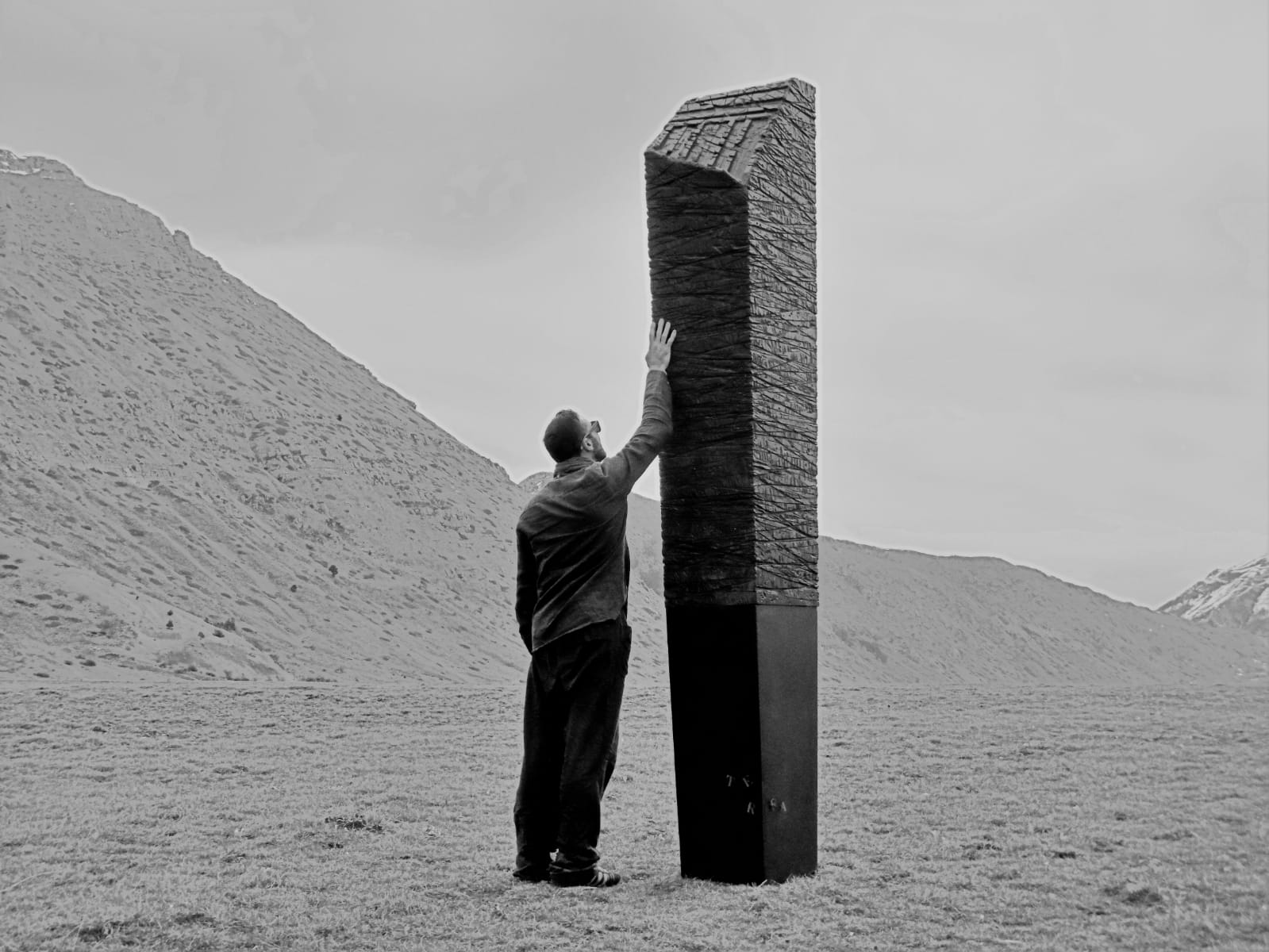
In his studio in Lucoli, this spirit becomes tangible. Spazio Inerte is more than a place to work; it is a space for encounter, exchange and creativity. Here, Gigliozzi speaks of silence, nature and slow time, of looking closely, working with his hands, and allowing things to unfold at their own pace.
What emerges is not a philosophy of having answers, but of staying attentive. Creativity, for him, seems less about arriving at a conclusion than about remaining curious enough to keep searching. There is a generosity in that way of thinking. To make space to look. Space to work. Space to listen. To remain with something long enough for it to reveal what it has been quietly holding.
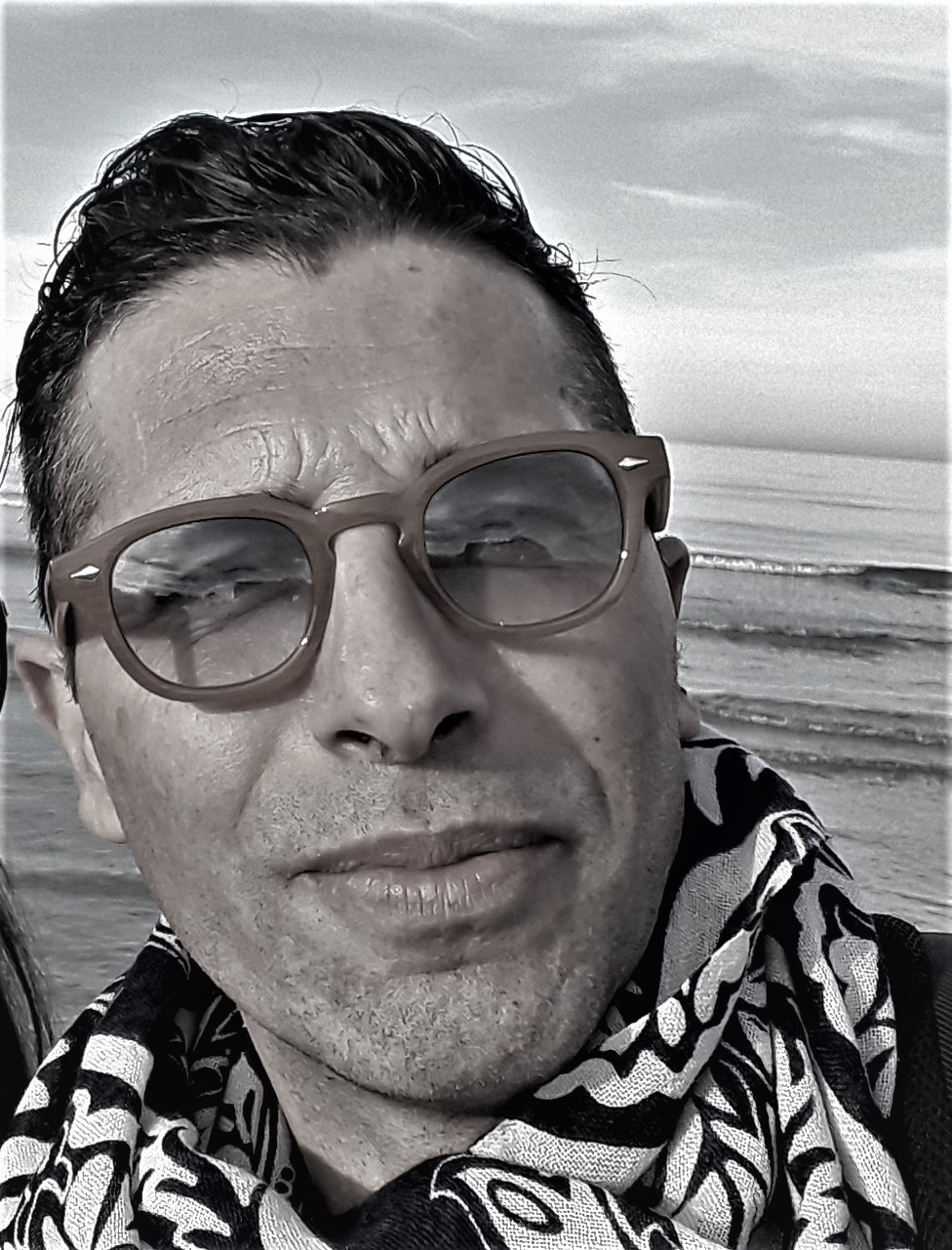
Giampiero Gigliozzi
This sense of time runs through his words. Slow time is not nostalgia, nor a retreat from the present. It is a way of returning to matter, to making, to oneself, and to the world immediately around us.
Perhaps this is what makes his work feel so close. In a culture increasingly shaped by speed, noise and immediacy, Gigliozzi reminds us of another possibility: that attention itself can be a form of practice, and that curiosity, quiet, patient and enduring, may be one of the most essential disciplines of all.
You have repeatedly said that you do not consider yourself an artist, but a “humble creative”. In a time when the word artist is often associated with recognition and success, why is this distinction important to you?
“I believe, with absolute humility and awareness, that the word artist today is attributed arbitrarily and with extreme superficiality. In the past, it was earned and attributed according to objective merit and specific criteria. The process of self-determination began at the beginning of the twentieth century and was subsequently intensified by the spread of globalisation. It is an extremely interesting subject that could be explored much further, although it would require a long and complex anthropological analysis.”
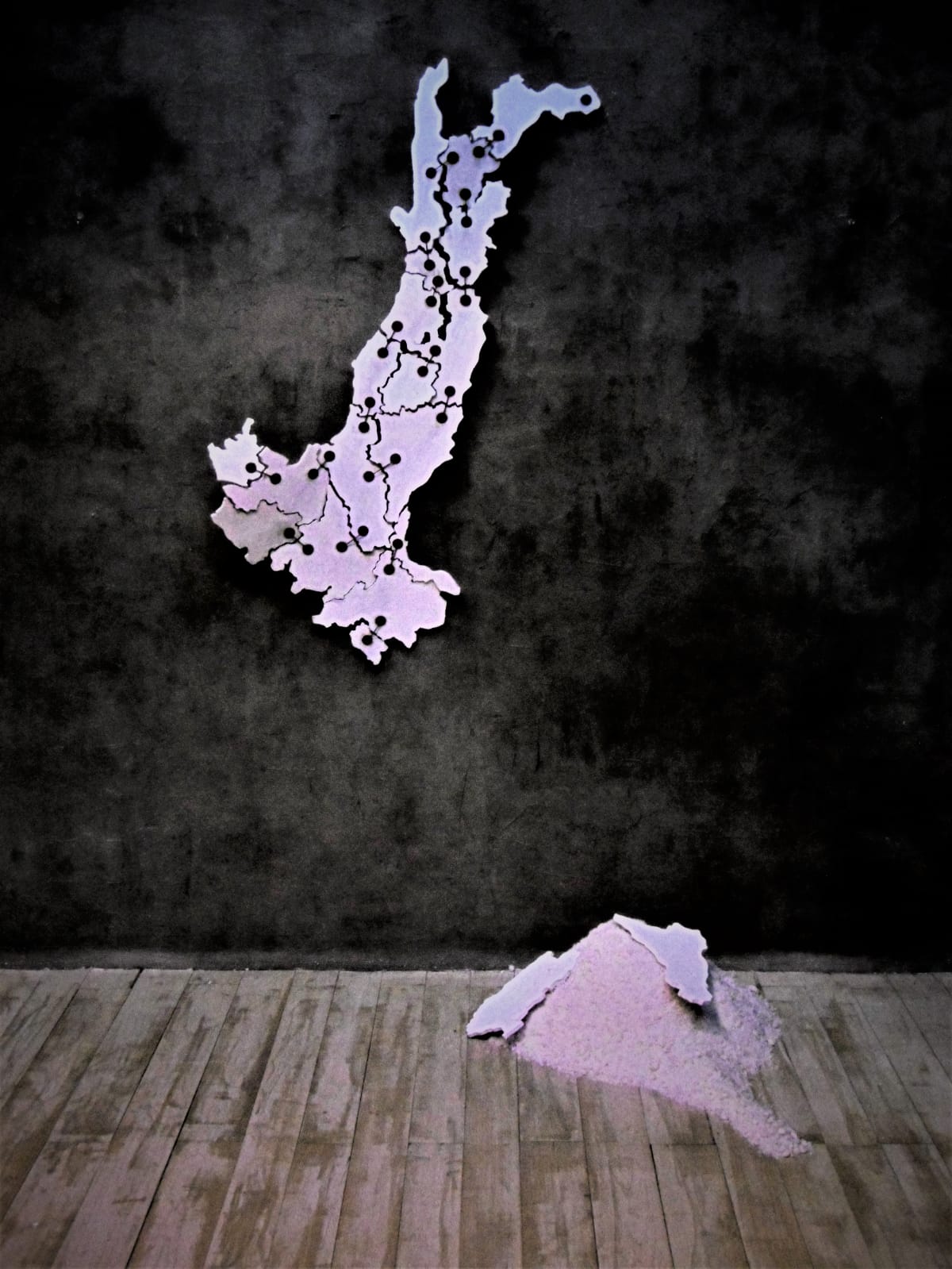
You have created more than 1,100 works. Yet you rarely speak about this number as an achievement. You speak instead about research. Do you believe an artist ever truly finds what they are looking for?
“My considerable production, in terms of the number of works created, began in the mid-1990s. It is not a reason for pride, but a real and concrete record of an experimental research process. It developed through my knowledge of the historical materials of sculpture and through the study of traditional techniques, beginning with drawing, my first love.
And I want to emphasise that I do not mean mechanical or copied drawing, which is very widespread today. I mean an inner, mental drawing, an image that generates unique formal solutions. Many artist-creatives identify a particular style that gratifies them and makes them recognisable to the public. I do not belong to this category. I feel the need to continuously research materials and techniques, beginning with emotional, social and scientific information.”
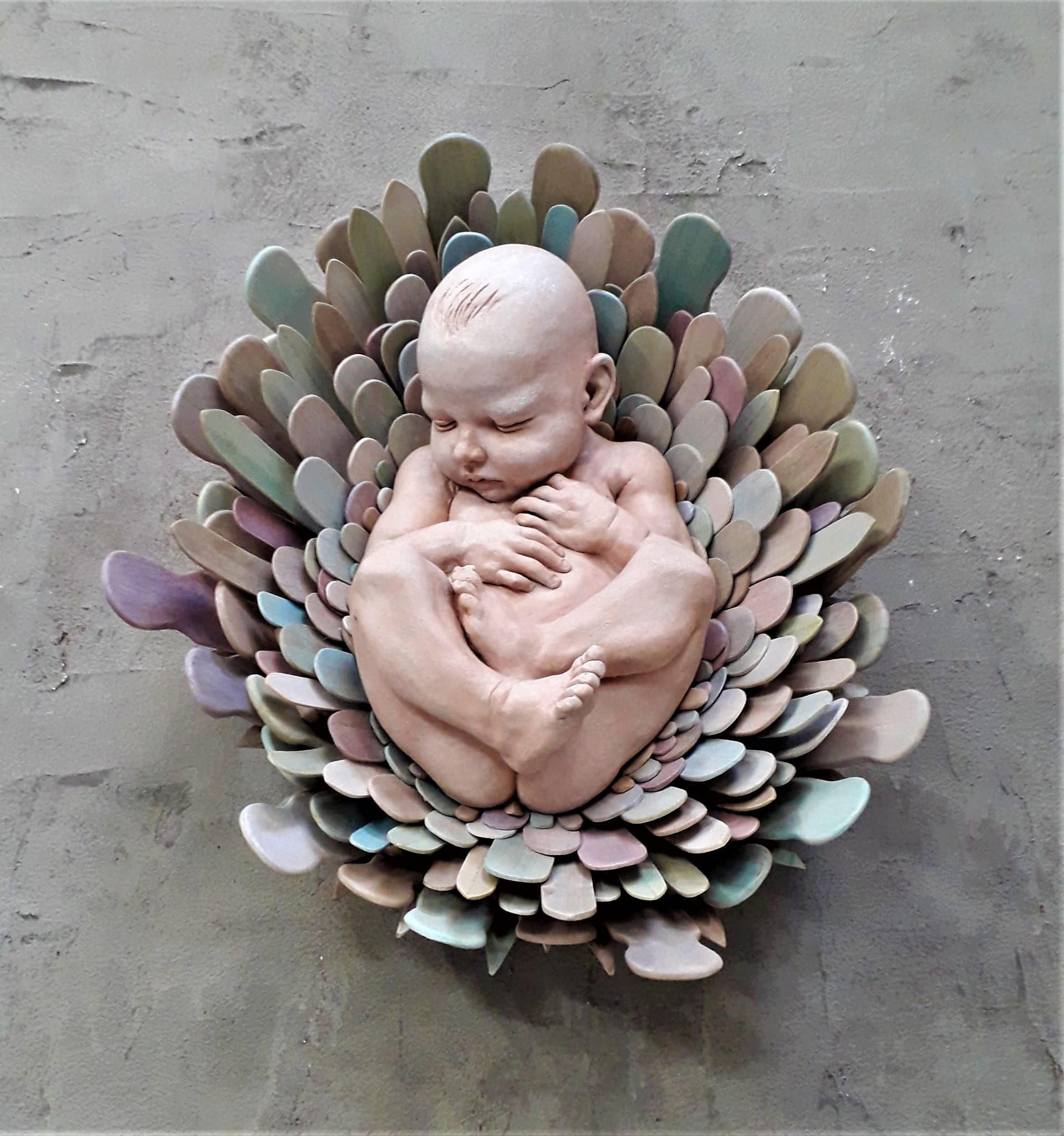
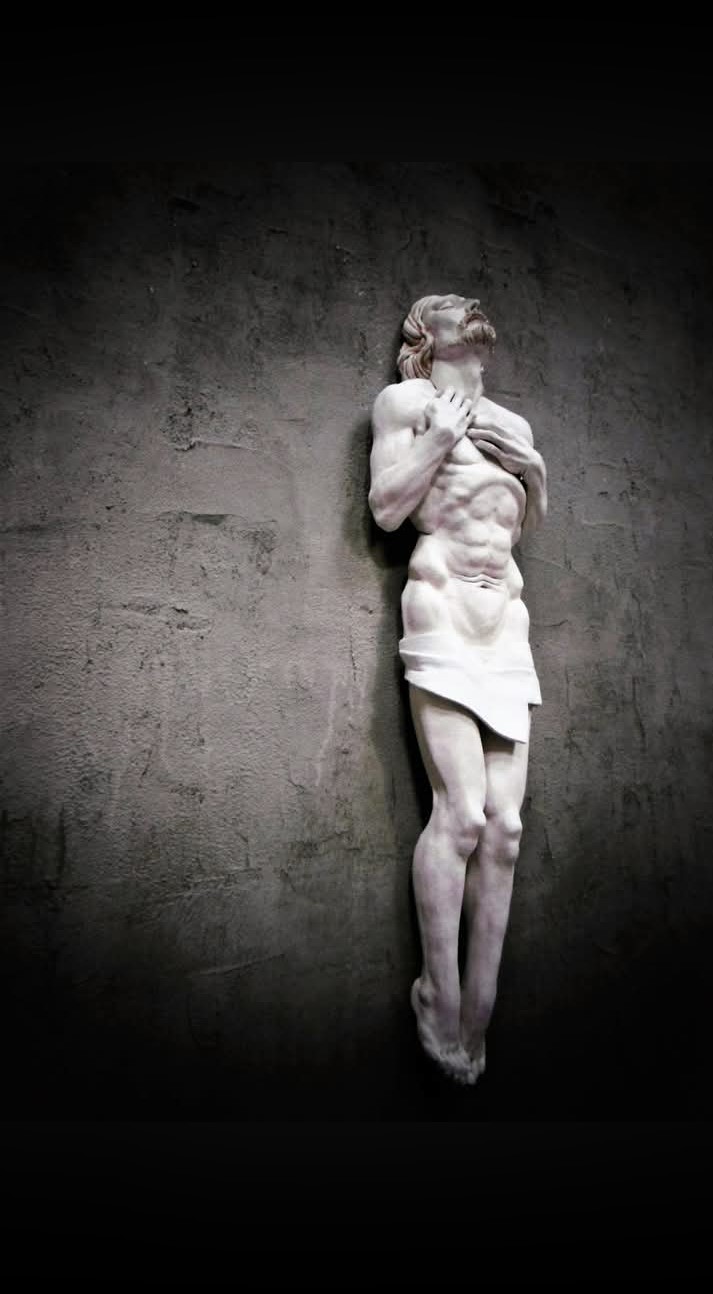
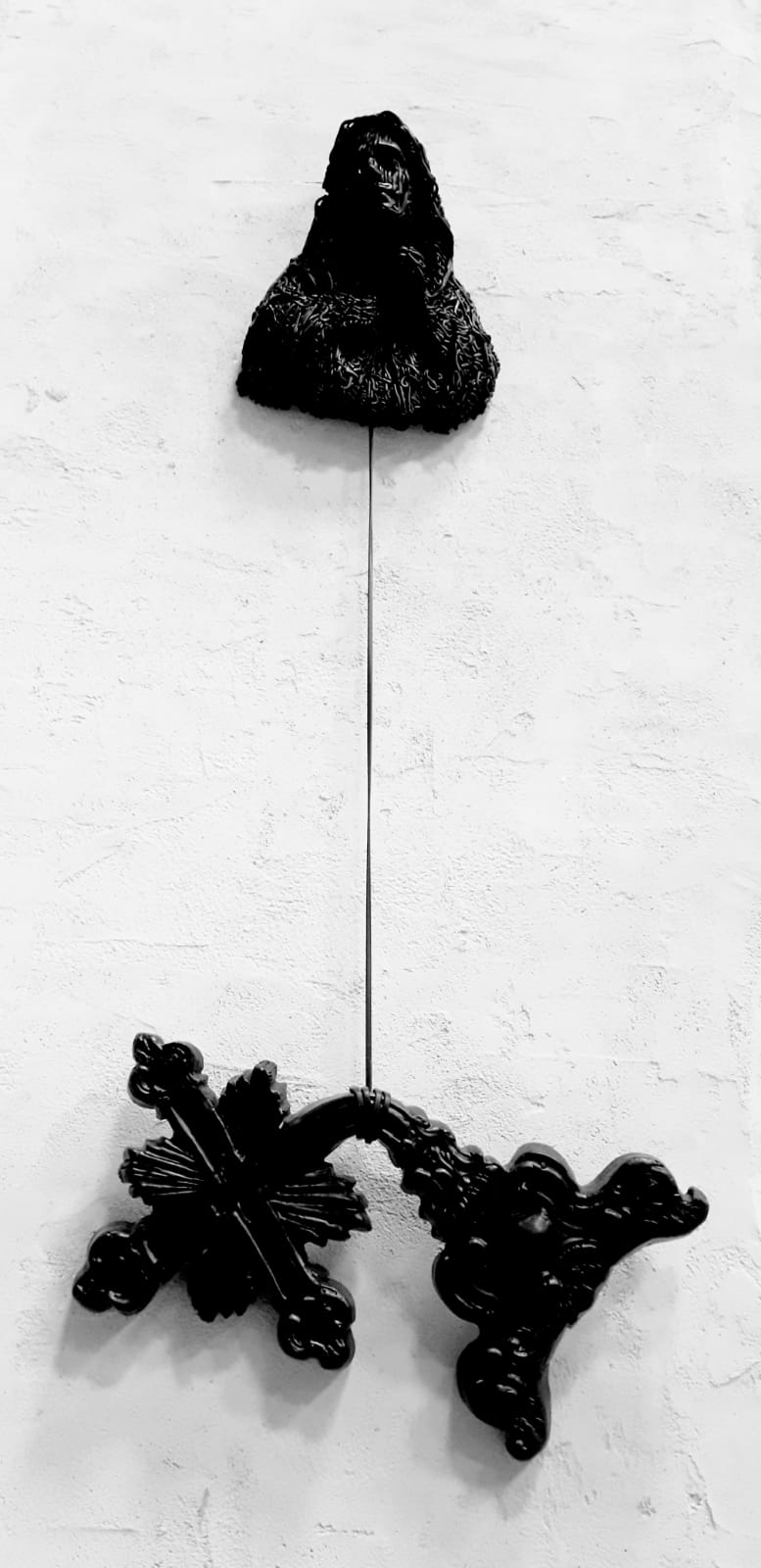
You have spoken about observing the world as a child and developing a visual memory. Is the ability to truly see something we learn or something we risk losing as we grow older?
“I believe that as children we absorb visual and emotional stimuli that become fundamental in the later stages of our development. I was fortunate in this respect. My father was a rationalist, almost obsessed with pure aesthetics, which he expressed through his work as an engineer. My mother, who was French, transmitted to me the values of classical aesthetics, history and beauty.
I consider myself a hybrid who has balanced these two values within his research. So, to answer the question: if the ability to be amazed, to remain curious and to continue asking questions is trained and nourished every day, I do not believe this quality should ever be exhausted.”
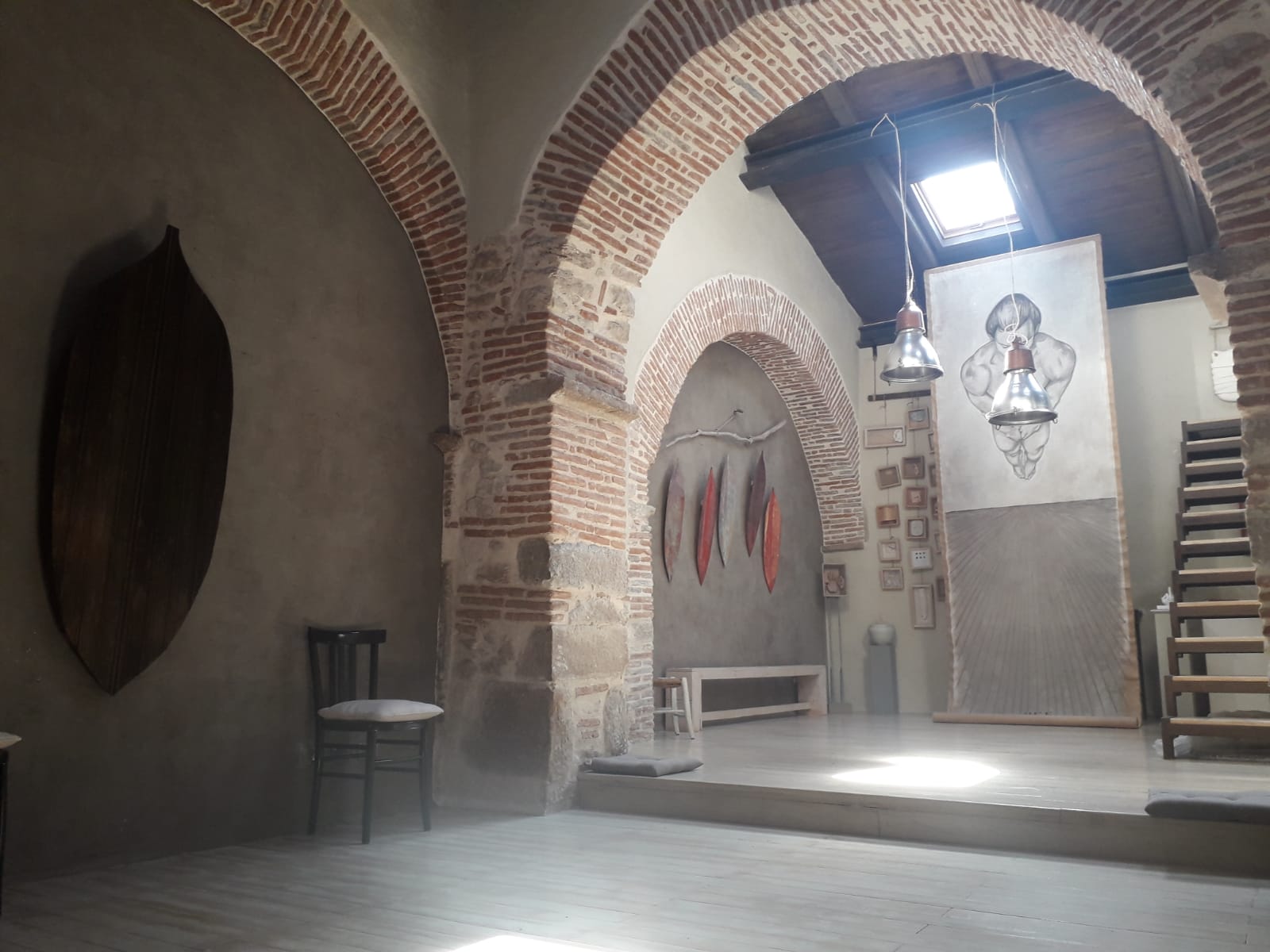
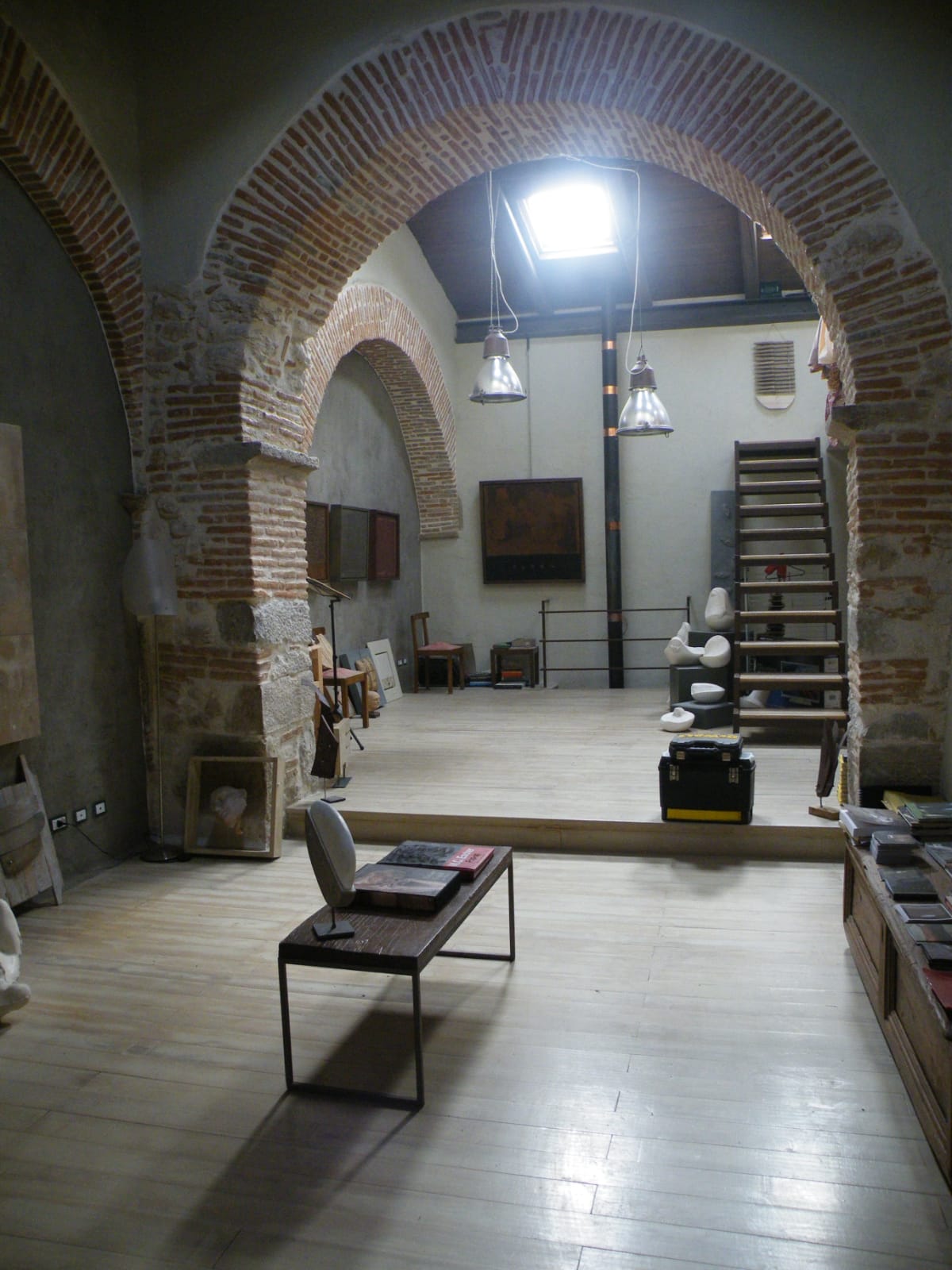
Spazio Inerte is much more than a studio. It has become a home, a laboratory and a meeting place where art, theatre, music and dialogue coexist. When did you realise that creating contexts for relationships could be as important as creating objects?
“Spazio Inerte is, and has been, a social project, an experiment within the territory that, over the years, became a necessity. One of its objectives was to make a shared space available to the community, completely free of charge. I should add, with a certain polemical tone, that in my opinion there are no adequate exhibition spaces in our territory. Art exhibitions are often reduced to pure display.
You chose to live and work in Lucoli, far from the major centres of contemporary art. Was this a choice of freedom, resistance, necessity or simply a way of remaining faithful to yourself?
“When I was around twenty, I understood that it was possible to establish a network of contacts even while living in remote places. Obviously, it depends on your objectives in life. For me, isolation is an indispensable resource. The necessary silence, the beauty of nature and of a creative environment become priceless. Escaping from collective neurosis is a cure for the soul.”
Wood, iron, terracotta, stone. Your materials never seem to be merely tools. They appear to contain a memory that existed before your intervention. Do you feel that you are in dialogue with matter rather than dominating it?
“It is an interesting question, but a very complex one. The answer would require a long and articulated treatise. Since I do not possess the gift of synthesis, I would prefer to leave the question suspended.”
Matter cannot always be reduced to a statement. Sometimes it must remain experienced.
Your works and installations seem to open a space for experience rather than impose a single interpretation. Is it more important for an artist to provide answers or to create questions?
“My individual works and installations obviously contain an articulated content, which I try to return to the viewer in an accessible form-concept. I believe that the public has moved away from certain contemporary languages because of incomprehension. My work is also a gentle attempt to re-educate the observer, who may be less familiar with today’s languages, which can often appear alienating. The titles I give my works are fundamental. They provide a starting point, a clue, a key for analysis. After that, I hope the emotional involvement arrives. And when that happens, the work has done its duty.”
You have dedicated your life to creating. What has creating taught you about being human that life alone might not have taught you?
“This is a beautiful question, but it is so intimate and complex that I do not think I know how to answer it. I can only say that my obsessive research and my love for work have been salvific for me. I recovered a profound relationship with matter, with making, but above all with the value of slow time, understood as a form of spiritual research and a way of knowing oneself and what surrounds us.”
Do you think our society is slowly losing the ability to observe?
“Unfortunately, the answer is an unequivocal yes.
Most of our society has lost the ability to distinguish and analyse data beyond appearances. In doing so, it has progressively forgotten the capacity for fascination, partly as a consequence of compulsive globalisation. In my opinion, we should learn to recover the value of time, the value of knowing how to make things, the observation of nature, and try to reconnect with what we might call simple systems.”
This idea of “simple systems” runs quietly through his entire philosophy.
To look. To make. To wait. To observe nature. To remain curious.
If someone spent an entire day with you in your studio rather than at an exhibition, what would they discover that no catalogue or critical text could tell them?
“This has happened dozens of times in my studio-laboratory over the past few years. And, without false modesty, I would say that compared with my category, which often enjoys considerable egocentrism, I am rather reserved and humble. In these situations, I prefer to speak about techniques, materials and the stages of execution rather than about my own works.”
Imagine a young sculptor knocking on your studio door tomorrow and asking: “How can I remain authentic for an entire lifetime?”
“Continue searching. Do research. Stay curious and experiment.
Talent is nothing without determination.”
One final question: Wine or beer?
“Red wine.” 🍷
Want more?
 Es befinden sich keine Produkte im Warenkorb.