
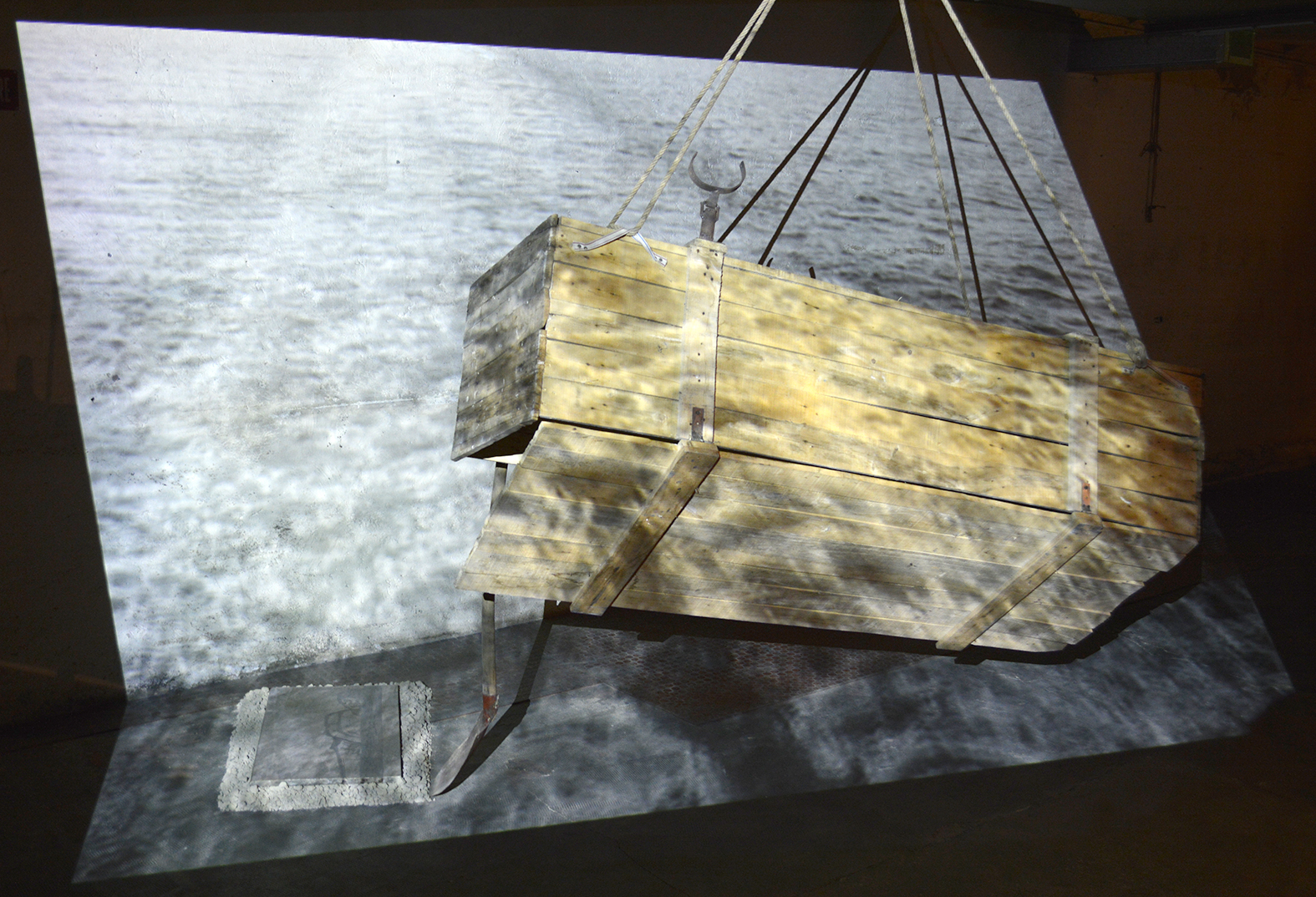
In this interview, artist Jörg Christoph Grünert reflects on his artistic journey, the experiences and encounters that have shaped his practice, and the role of memory, ecology, materials and social transformation in his work. From his early artistic explorations to his long-standing collaborations across art, theatre and education, he offers insights into a practice deeply rooted in human experience and the relationship between people and their environment.
1. Your artistic journey has developed over many years and across different places. Which experiences, encounters, or moments have shaped your artistic language most profoundly?
It’s difficult to answer. On the one hand, I could say that my experience of real life has shaped everything, my political and cultural activism on the streets, my work in factories or with craftspeople; on the other hand, I could also mention my encounters with many professors and the education I received at university (in Germany) and at the academy; I learnt a great deal from professors such as Pasquale Liberatore, Fabio Mauri, Ciriaco Campus and Tullio Catalano.
Certainly, the exchange with other artists and non-artists has also played a part. For example, in 1991 I created the ‘DEPOSITO DEI SEGNI’ stamp as a metalinguistic symbol through which artists could identify themselves whilst creating art as an artistic collective (and today the association of which I am a founding member bears this name, and we still collaborate regularly with the musician Luigi Morleo).
Another important meeting was with the actress Cam Lecce, with whom I still have an ongoing artistic partnership. Together with her, I have developed our range of workshops on theatre and artistic pedagogy (an activity I consider extremely important, one that supports and promotes the opportunity to discover the deeper meaning of the creative process wherever it may be found), performance and theatre.
Another profound experience – on a human, professional and indeed political level, is our collaboration with the NGO Al-Jana/ARCPA in Beirut. Since 2004, we have been working together primarily on the artistic, cultural and educational training of young Palestinian and Lebanese workers who are active in Palestinian refugee camps and marginalised areas of Lebanon; since 2015, Syrian refugees have also been taking part in this programme. This human exchange is truly immeasurable.

2. Human experience, memory, space, and transformation are recurring themes in your work. When did these subjects become central to your artistic practice?
I would say that ecology (in the sense of the interaction of systems) has always been the central theme of my aesthetic concern and my artistic practice. Ecology, that is, understood not merely as environmentalism or sustainability but as the horizon of the human condition tout court, and thus encompassing the economy, war, social justice, education, relationships, interaction, rights, and so on, a perspective very close to Beuys and ‘social sculpture’, to Grotowski and the ‘strict pragmatism’ in theatre, ‘the ecology of humankind’, or to Bateson’s ‘Towards an Ecology of Mind’. I do not work on a trivial or symbolic level, etc., so the sculptures, installations, performances and/or theatre (and also the workshops) are manifestations of transformative processes. In my creative processes, I work on extended configurations, a sort of indicatory paradigm that is constructed through an abductive approach.
3. Your sculptures and installations often explore the relationship between presence and absence, visible structures and hidden meanings. How do these contrasts influence the way you create?
In my explorations, I have always wondered whether a form could exist that was neither geometric nor organic. This line of questioning has led me to observe nature in a specific way; it has prompted me to ‘look’ at natural forms as if they represented archetypal forms. I therefore consider the meta-form of materials – both in a general, abstract sense and in relation to the specific material and its form that I have before me – to be of great importance in my work; for me, materials have a concrete significance, even in a spiritual sense, as they are configurations to be respected and valued within the creative process. Can the absence of stone reveal what stone is? Can a presence make us consider an absence, a structure make us perceive what is invisible to the eye, and vice versa? Can such elements open our vision to compassion for human and natural tragedies and serve as a starting point ‘towards an ecology of the mind’?
4. How does a new artwork emerge? Does the process begin with an idea, a personal experience, a place, a material, or an observation of society?
I describe my approach to the creation of works of art or artistic environments as a ‘mimetic’ process, a generative dialectic between nature, myself, the ‘vitality’ of the materials, of matter itself, artistic techniques, and the work as a fragment of existence.
5. Materials play an important role in your artistic practice. How do you choose the materials for a work, and what kind of dialogue do you create between material, form, and meaning?
I shall answer this question by quoting the words of Antonio Gasbarrini, an art critic, who, in a summary of my work, answers your question as follows: …“From this stems my personal interpretation of Jörg Christoph Grünert’s underlying poetics: that of a ‘visual dramaturgy’ which is very much present in his sculptures, prints, paintings and, above all, in his site-specific installations and environments. Thus, every blow of the hammer, every mark made, every material juxtaposed, every pigment, acts amongst themselves and for themselves – in a sort of staging of the ‘work’ the ineffable drama of life.
The grammar and syntax of a visual aesthetic ‘pre-writing’, therefore, together with the epiphanic immanence of the sorrowful song of matter-environment-being, form the conceptual framework aimed at rediscovering the unconfirmable Sacredness with which even the atoms and subatomic quantum particles of an enigmatic, ever-evolving universe are imbued”. …
6. Your work “angelo senza fortuna”, your sculptures often appear to preserve traces of time and transformation. How important are memory and the passage of time in your work?”
“Your sculptures often appear to preserve traces of time and transformation. How important are memory and the passage of time in your work?”
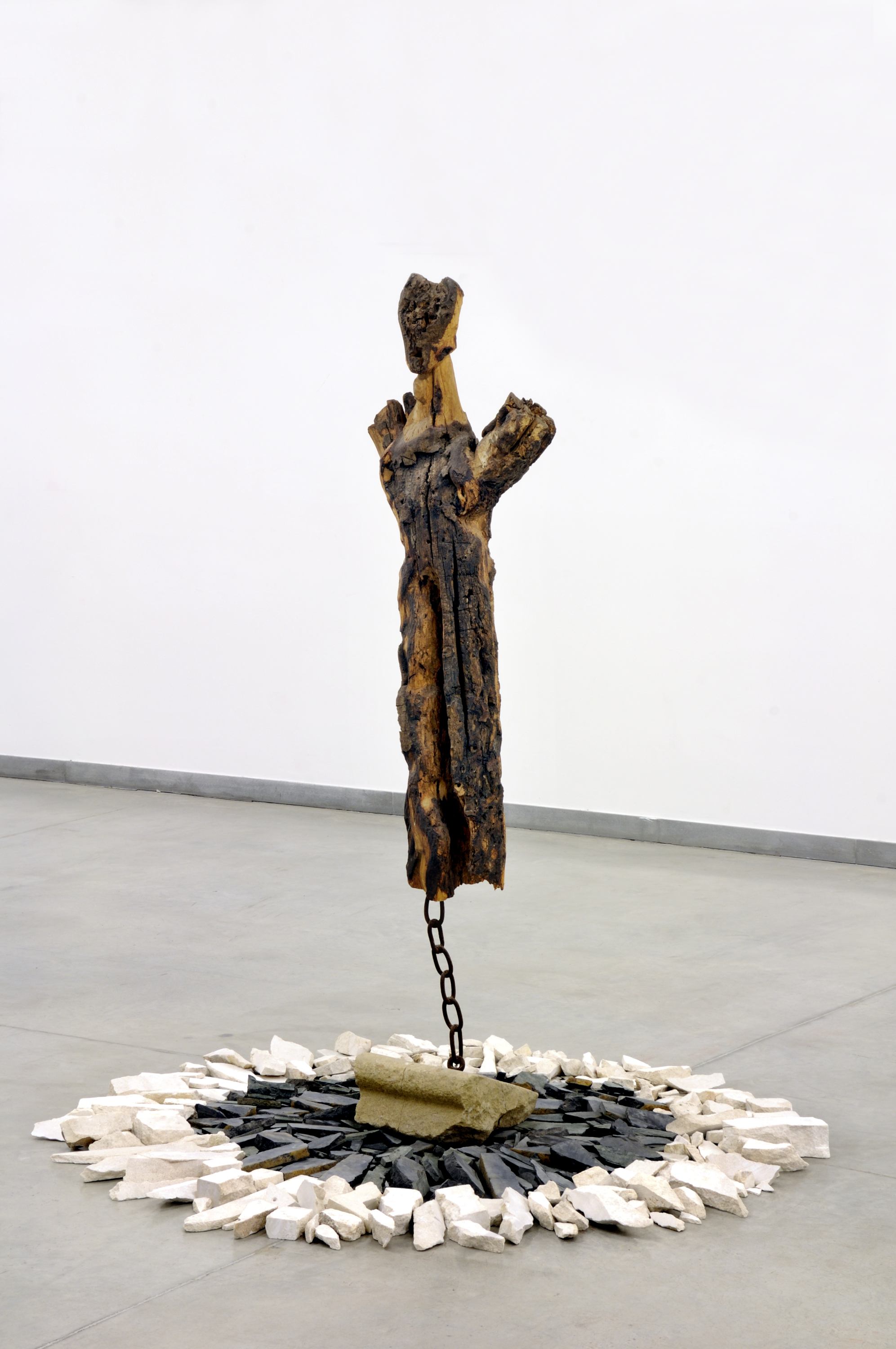
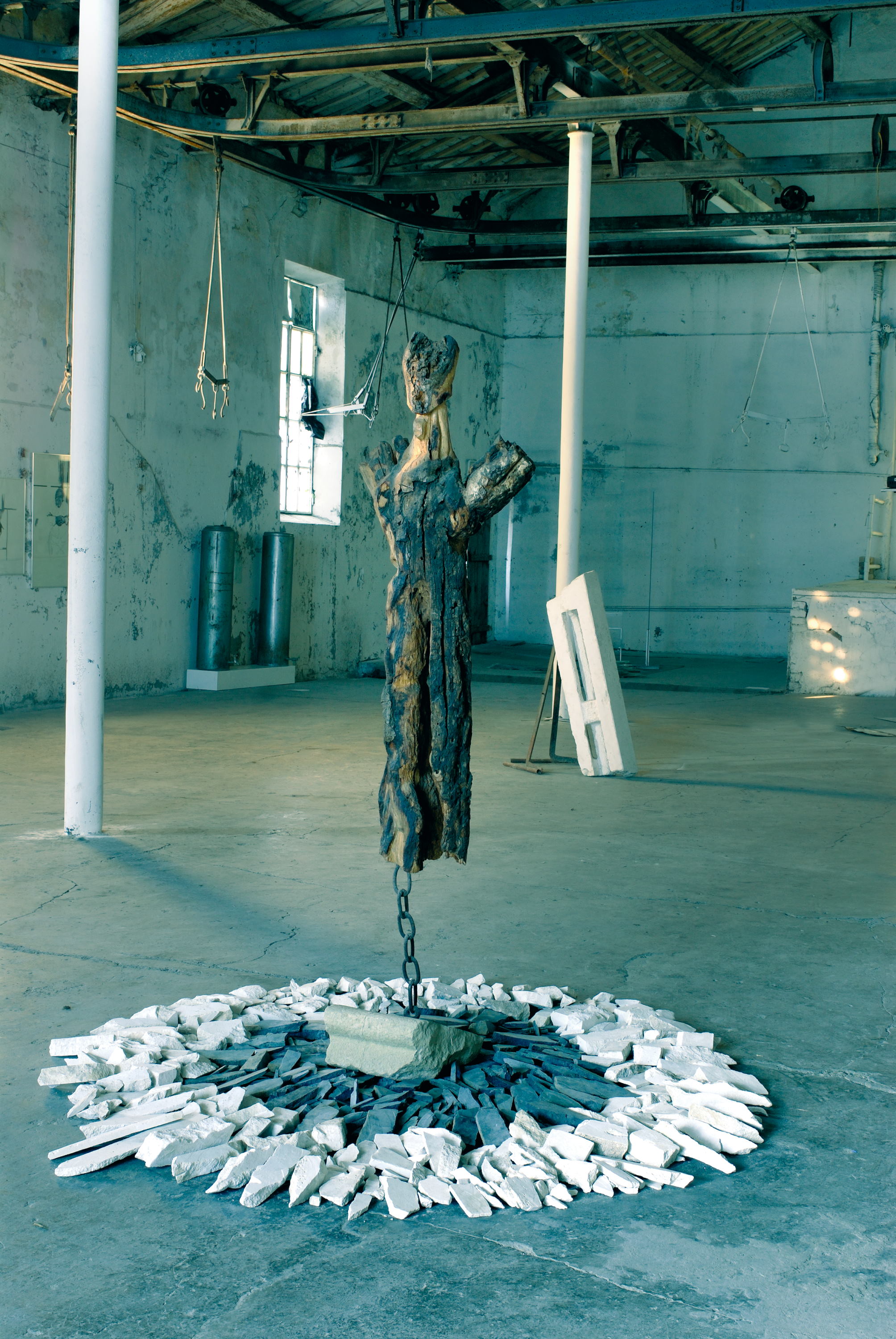
The sculpture ‘The Unfortunate Angel’ is not just one of my sculptures; it forms part of the environment/performance “MEDEA’s room” (written and performed by Cam Lecce and Jörg Grünert, with music by Luigi Morleo, 1998) by DEPOSITO DEI SEGNI. Many of my works take the form of art installations, environments, or habitats for theatrical performances.
The title is taken from a poem (‘der glücklose Engel’) by Heiner Müller (I believe it is his reworking of Walter Benjamin’s famous interpretation of Paul Klee’s watercolour). We also adapted this poem for the performance’s script. The actress Cam Lecce and I were experimenting with our creative processes to see how they might intertwine. The theme that crystallised during this process was gender discrimination. I believe that nothing – and especially the present (with its tragedies, horrors, organisation…) but also our vision of the future, and how to address the future interpretation of human presence in the world – can be understood without drawing on memory, history, and material and immaterial transformations.
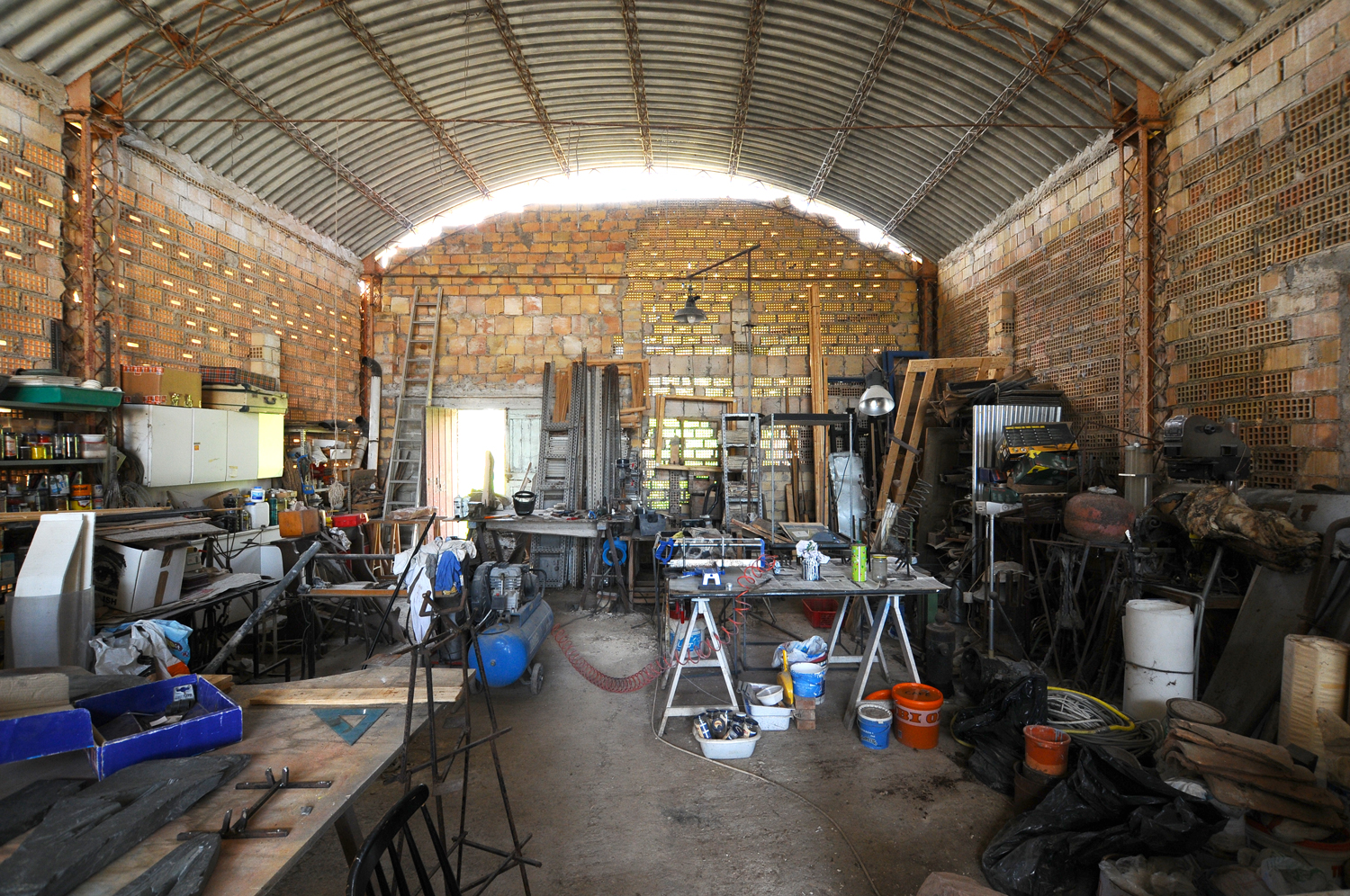
- STUDIO OF JÖRG CHRISTOPH GRÜNERT
7. The relationship between human beings and their environment is a recurring element in your art. How have places such as Abruzzo influenced your artistic vision and your way of observing the world?
8. Many of your works address deeper human questions: vulnerability, freedom, identity, and social change. What role can art play in making these themes visible and creating dialogue?
I shall combine these two questions by answering them both with a stark response found in the interpretation of my works by Rolando Alfonso, an art critic. I quote: “For our artist, the stark, harsh and sombre portrayal of the human condition – which dominates the Reformed consciousness of northern Europe – has, along with him, not only crossed the Italian borders but has pursued him wherever he has subsequently sought answers and refuge from an inescapable anguish. Two distinct works of his can be identified as marking the hypothetical, elusive boundaries—devoid of an exact chronology—of the beginning and end of his journey: *Angeli bruciati* and *Hommage à la liberté*.
In the virtual and historical space between these two epistemological landmarks lie the particular and successive variations which, in my view, converge towards a centre represented by *Frammenti per una anatomia sociale*. This latter work formally resolves its narrative by employing the traditional technique of painting. Indeed, for the artist, there can be no greater symbolic interplay of forms, no greater interplay of meanings between different materials arranged along the pathways of meaning. The act of denunciation is clear, and the iconography takes on a forthright and recognisable directness. Thus, both the wounds inflicted by wars and the bodies torn apart, deformed and rendered inhuman by hunger … scream out their insane objectivity. “The form of tragedy brings the horror to an end with the conclusion of the work – it halts the destruction, renders the intolerable tolerable and comprehensible, and subordinates evil, error and the contingent to poetic justice”.
This statement by H. Marcuse sheds light on Jörg Grünert’s *Fragments*, but it also opens the way – across a fluctuating and varied spectrum of formal expressions – to a direct analysis of purely exploratory poetics, tracing paths, more or less frequently taken, by the languages of art in recent decades.
*The Place for the Nameless*, *Homo Faber*, *Tower*, *Raft*, *X*, *Rest*, *Thermometer*, *Geschichte I–IV*, together with the marvellous *Grammars*, are works that embody, at their very core, an ambivalence inherent to art: denouncing reality whilst erasing that denunciation within the aesthetic form.
Following the creation of the *Frammenti* (dated from ’92 to ’94), Jörg Grünert explores different avenues through which he tests this power.
These paths would seem to encapsulate and cauterise within themselves horror and absolute evil. That power which lies in wait, lurid and latent, and is activated only upon contact – or, more precisely, upon the almost objective coexistence of the human with such dimensions.”
9. Looking back at your artistic path, is there a particular work or project that represents an important turning point or has a special personal meaning for you?
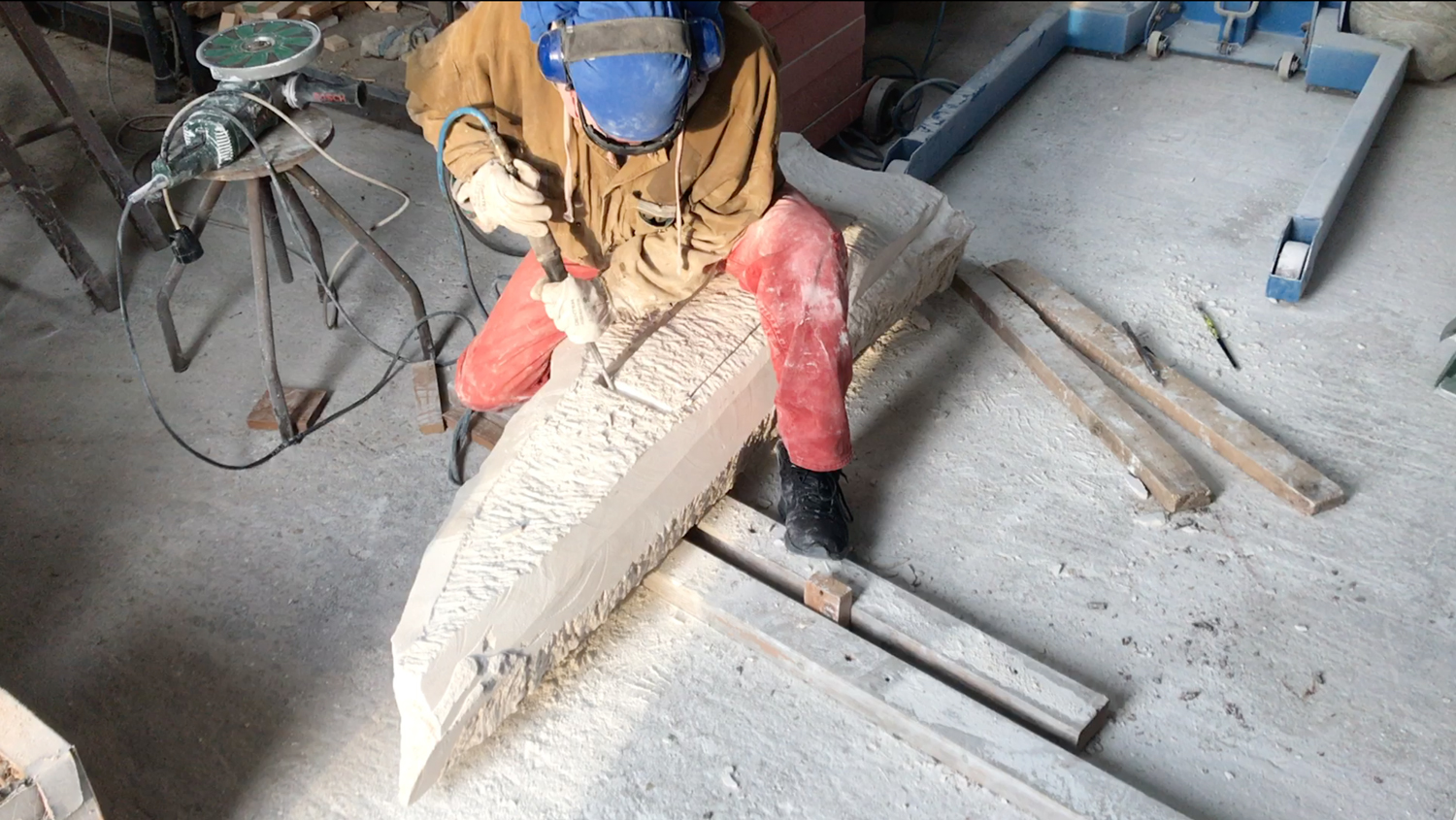
“Herz”, from 1988, was the work that changed everything. Although I was already ‘active’ as an artist, I consider “Herz” to be my first work of art. It was the first work that truly astonished me. This sense of wonder raised questions I had never considered before and left me with no choice but to gather clues and continue along this path of change, this transformation of mine. …
10. When people encounter your work for the first time, what do you hope they experience, question, or take with them after this encounter?
I don’t have any particular expectations because, when it comes to the configurations and compositions of my works, I don’t think about the viewer. I hope that my works have enough presence to stimulate the sensitivity and intellect of those who view them. After all, one hopes that viewers are, in any case, well-educated, because nothing, and therefore art too, can be understood without a certain level of education, curiosity and interest.
11. Wine or Beer?
Wine.
Want more?

 No products in the cart.